
Squirrel Amazing Facts — The Forgetful Genius That Plants Entire Forests
The squirrel is one of the most familiar small mammals found in parks, gardens and forests across much of the world, yet this common backyard visitor possesses genuinely remarkable cognitive abilities and survival adaptations that most people never fully appreciate. From a memory system sophisticated enough to relocate thousands of hidden food caches to deliberately deceptive behaviour used to outwit potential thieves, squirrels are far more behaviorally complex than their familiar, everyday appearance suggests. Here are the most amazing squirrel facts that reveal the surprising intelligence behind this common but underestimated animal!
🧠 A Memory System That Maps Thousands of Locations
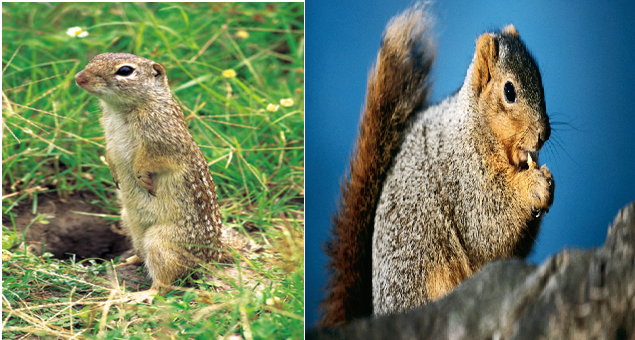


Squirrels possess a genuinely impressive spatial memory system that allows them to successfully relocate the vast majority of food items they bury throughout autumn, despite hiding thousands of individual nuts and seeds across a wide foraging territory. Research has revealed that squirrels use a sophisticated organisational strategy that scientists describe as "chunking," sorting and burying nuts according to specific type, size and nutritional quality in distinct mental and physical clusters, rather than hiding them entirely at random. This organised caching strategy allows a squirrel to remember not just the specific locations of buried food, but also general patterns regarding what type of food is likely buried in which general area, significantly improving overall retrieval efficiency throughout the challenging winter months when food sources become considerably scarcer.
🎭 Deliberately Deceiving Potential Thieves
Squirrels display a remarkable and genuinely sophisticated deceptive behaviour specifically designed to protect their valuable buried food caches from potential theft by other squirrels or different competing species. When a squirrel becomes aware that it is being watched by another animal while burying food, it will frequently perform an elaborate fake burying display, digging a hole and going through all the typical motions of burying food, but without actually depositing anything inside, all while keeping the real food item concealed within its mouth. This sophisticated deceptive behaviour, requiring the squirrel to actively consider another animal's perspective and likely future actions, demonstrates a notably advanced level of social cognition rarely documented in other small mammal species.
🌳 Accidental Forest Planters
Because squirrels cannot successfully relocate every single nut they bury throughout the autumn season, a significant percentage of buried nuts are never recovered and instead remain undisturbed in the ground, where many eventually germinate and grow into new mature trees. This unintentional but ecologically vital behaviour makes squirrels one of the most important natural tree-planting agents in many forest ecosystems worldwide, with oak forests in particular relying heavily on squirrels for natural regeneration and dispersal of acorns across considerable distances from the parent tree. Some forest ecologists estimate that squirrels are directly responsible for planting a substantial proportion of new oak trees in many established temperate forest ecosystems.
🦴 Teeth That Never Stop Growing
Like other members of the rodent family, squirrels possess front incisor teeth that grow continuously throughout their entire lives, requiring constant gnawing on hard materials such as nuts, tree bark and other tough plant material to keep their teeth naturally worn down to a manageable, functional length. If a squirrel's teeth were somehow prevented from this regular natural wear, perhaps through injury or unusual dietary circumstances, the continuously growing teeth could eventually grow long enough to prevent normal eating entirely, potentially leading to serious malnutrition. This biological necessity for constant gnawing is a primary reason why squirrels are drawn to chew on a wide range of hard materials throughout their daily activity.
🪂 Flying Squirrels That Don't Actually Fly
Despite their popular common name, flying squirrels do not engage in true powered flight in the way birds or bats do, but instead perform a remarkably effective form of extended gliding using a specialised skin membrane called the patagium, which stretches between their front and back legs on each side of their body. When this membrane is fully extended during a glide, flying squirrels can travel horizontal distances of over 45 metres from a single elevated launching point, using their distinctive flattened tail as a stabilising rudder to control direction and a braking mechanism to slow their descent safely just before landing on a target tree trunk.
👂 An Alarm Call System With Genuine Specific Meaning
Squirrels communicate using a surprisingly sophisticated vocal alarm system, producing distinctly different alarm calls depending on the specific category of approaching predator detected. Research has documented separate, recognisably different alarm calls used specifically for aerial predators such as hawks compared to ground-based predators such as cats or foxes, allowing other nearby squirrels to immediately understand the specific type of threat present and respond with the most appropriate evasive behaviour, whether that means freezing motionless against tree bark in response to an aerial threat or quickly climbing higher into tree branches in response to a ground-based predator.
🌍 Found on Every Continent Except Antarctica and Australia
There are over 280 recognised squirrel species found across every continent on Earth except Antarctica and Australia, ranging in size from the tiny African pygmy squirrel, weighing just 10 grams, to the Bhutan giant flying squirrel, which can weigh over 1.5 kilograms. This remarkable diversity includes ground squirrels, tree squirrels, flying squirrels and various other distinct lineages, each having evolved specific adaptations suited to their particular habitat and lifestyle, contributing to the squirrel family's overall success in colonising such an impressively wide range of environments across the world.
🏠 Building Elaborate Nests Called Dreys
Tree squirrels construct elaborate spherical nests called dreys, typically built high in tree branches using twigs, leaves and various other natural plant materials, with a softer, more comfortable inner lining made from moss, grass and shredded bark fibres for additional warmth and comfort. A single squirrel may maintain and use several different dreys simultaneously within its home territory, providing multiple alternative shelter options and an important backup if one particular nest is damaged, destroyed, or compromised by a predator discovering its specific location.
Far more than a simple backyard visitor, the squirrel is a genuinely intelligent, ecologically vital animal whose accidental forgetfulness quietly plants entire forests for future generations. 🐿️
All content written originally by Geeta Singh.
Sources: Information researched from Wikipedia (en.wikipedia.org), National Geographic, Royal Society Journal, Smithsonian Institution.


Comments
@cooking Thanks its a compliment!!
@ arpana thanks dear!
have a nice day to u too all