Posts

Showing posts with the label pollinators

Hover Fly Amazing Facts — The Harmless Wasp Impersonator Pollinating Your Garden

Image
    Hover flies are among the most accomplished insect mimics in the world — flies that have evolved to look convincingly like wasps and bees despite being completely harmless and entirely incapable of stinging. Yet these unassuming insects are also among the most important pollinators in temperate ecosystems and perform some of the most extraordinary aerial manoeuvres of any flying insect. Here are the most amazing hover fly facts! Did you know? Hover flies can fly backwards, sideways and hover in a fixed spot in mid-air with extraordinary precision — and some species migrate across the English Channel and North Sea each autumn in their millions, travelling hundreds of kilometres in a single journey! ✈️ Masters of Aerial Precision Hover flies — also called flower flies or syrphid flies — are named for their most distinctive behaviour: the ability to hover with extraordinary stability in a fixed position in mid-air, maintaining their precise location against wind and air cu...

Butterfly Amazing Facts — The Insect That Dissolves Itself Completely to Be Reborn

Image
A butterfly's life cycle consists of four major stages, namely - the egg, larva, pupae and adult stage . This process is known as   metamorphosis . The average lifespan for an adult butterfly is just 20 to 40 days . Butterflies have their skeletons on the outside of their bodies is called the exoskeleton.   They don’t have lungs, butterflies breath through   openings   in their   abdomen   called spiracles. They have their taste receptors on their feet.   Butterfly has hair on its wings to detect changes in air pressure . The butterfly is one of the most familiar and most universally beloved insects on Earth — yet the biology hidden beneath those beautiful wings is far more extraordinary than most people ever realise. A butterfly's transformation from caterpillar to winged adult involves one of the most dramatic and most biologically shocking processes in all of nature — the caterpillar essentially dissolves itself into living soup and rebui...

Honey Bee Amazing Facts — The Corporate Employees of the Animal Kingdom

Image
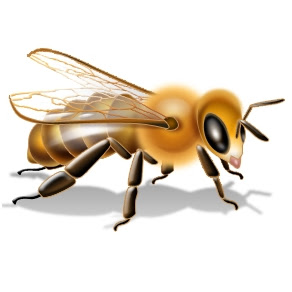
Honey bees are among the most important animals on Earth — not because of the honey they produce, valuable as that is, but because of their irreplaceable role as pollinators of the crops and wild plants that sustain virtually all terrestrial life. Yet beyond their ecological importance, honey bees are extraordinary animals in their own right — capable of mathematics, democratic decision-making, symbolic language and navigation feats that challenge our understanding of what small-brained insects can actually do. Here are the most amazing honey bee facts! Did you know? Honey bees communicate the precise location of flowers to their hive-mates using a symbolic "waggle dance" — a figure-eight movement that encodes both the direction (relative to the sun) and exact distance to the food source with extraordinary precision! 💃 A Dance That Is Actually a Language The honey bee waggle dance is one of the most remarkable communication systems found in any non-human animal. When a for...

Ladybird Amazing Facts — The Farmer's Friend With a Chemical Superpower

Image
The ladybird — called a ladybug in North America and a lady beetle by scientists — is one of the most universally loved insects in the world, appearing in children's books, good luck charms and garden folklore across dozens of cultures. Yet behind its cheerful red-and-black appearance lies a surprisingly fierce predator with a remarkable chemical defence system and a genuinely fascinating biology that most people never learn. Here are the most amazing ladybird facts! Did you know? When threatened, ladybirds deliberately bleed from their leg joints — releasing a foul-smelling, bitter-tasting yellow fluid called reflex blood that is toxic to many predators. The bright red colour is a warning signal that this chemical defence is coming! 🩸 Bleeding as a Defence — On Purpose Ladybirds deploy one of the most unusual defensive strategies found in any insect — reflexive bleeding, or autohemorrhaging. When threatened by a predator, the ladybird deliberately increases blood pressure in its...