Posts

Showing posts from May, 2026

Black-Footed Ferret Amazing Facts — North America's Most Endangered Mammal Came Back From 18 Individuals

Image
The black-footed ferret is one of the most dramatic conservation recovery stories in North American history — a species that was declared extinct in 1979, then rediscovered in 1981 when a dog brought a dead individual to a Wyoming farmhouse, then reduced to just 18 known surviving individuals before an extraordinary captive breeding and reintroduction programme gradually brought the species back from the very edge of oblivion. Here are the most amazing black-footed ferret facts! Did you know? The entire surviving population of black-footed ferrets descended from just 18 individuals captured in 1985-1987 — making it one of the most extreme genetic bottlenecks ever survived by a vertebrate species, and the most successful large mammal recovery from such a narrow genetic base! 💀 Declared Extinct — Then Found Again The black-footed ferret's story is one of conservation's most dramatic and emotionally powerful narratives. The species was considered likely extinct by the late 1970...

Solenodon Amazing Facts — The Ancient Venomous Mammal That Nearly Nobody Has Heard Of

Image
The solenodon is one of the world's most ancient and most obscure mammals — a shrew-like creature found only on the Caribbean islands of Cuba and Hispaniola that has survived virtually unchanged for over 76 million years, predating the extinction of the non-avian dinosaurs. It is also one of the very few mammals capable of delivering venom through a modified tooth — a characteristic so unusual in mammals that the solenodon's venomous bite was initially doubted by scientists who thought the specimen descriptions must be incorrect. Here are the most amazing solenodon facts! Did you know? The solenodon is one of only a handful of venomous mammals on Earth — it delivers venom through a groove in one of its lower incisors, similar to a snake fang, making it one of the few mammal species on the planet capable of a genuinely venomous bite! ☠️ A Venomous Mammal — A Genuine Rarity Venomous mammals are extraordinarily rare — fewer than a dozen species among the entire class Mammalia ar...

Dimetrodon Amazing Facts — The Sail-Backed Predator That Was Not a Dinosaur

Image
Dimetrodon is one of the most recognisable prehistoric animals in popular culture — a large, sail-backed carnivore that frequently appears in dinosaur toys, books and exhibitions. Yet Dimetrodon was not a dinosaur. It was not even remotely closely related to dinosaurs. In fact, Dimetrodon is more closely related to you than it is to any dinosaur that ever lived. Here are the most amazing Dimetrodon facts! Did you know? Dimetrodon is more closely related to mammals — including humans — than it is to any dinosaur. It belongs to a group called synapsids, which are the evolutionary ancestors of all mammals, living and extinct. The dinosaurs came from a completely different evolutionary line! 🧎 Closer to Humans Than to Dinosaurs This is perhaps the most surprising fact about Dimetrodon — despite frequently appearing alongside dinosaurs in popular culture and children's toy sets, Dimetrodon is not a dinosaur and is not even a reptile in the modern sense of the term. Dimetrodon belongs ...

Woodpecker Amazing Facts — The Drilling Machine With a Brain That Should Be Destroyed By Now

Image
 Woodpeckers, piculets and wrynecks all possess  Woodpeckers are among the most remarkable birds in the world — capable of drilling into hard wood up to 20 times per second, hitting trees with a force that would cause severe brain injury in virtually any other animal. Yet woodpeckers suffer no neurological damage from this extraordinary repetitive impact. Scientists studying how they achieve this have made discoveries with direct applications to human concussion treatment and protective equipment design. Here are the most amazing woodpecker facts! Did you know? A woodpecker drums into wood up to 20 times per second — generating head deceleration forces up to 1,200 times the force of gravity — yet never suffers brain damage. Engineers studying this have inspired new designs for crash helmets and concussion protection! 🧠 The Anti-Concussion Brain A woodpecker's skull contains a suite of anti-concussion adaptations so remarkable that researchers studying them have directly info...

Musk Deer Amazing Facts — The Fanged Deer That Produces the World's Most Valuable Natural Scent

Image
The musk deer is one of the most unusual and most threatened deer species in the world — a small, secretive deer of Asian mountain forests that possesses both long, sabre-like fangs and a scent gland producing the most expensive animal product in the world by weight. Neither its fangs nor its extraordinary musk are used for aggression or defence — they are tools of reproduction that have driven the species to the edge of extinction through human demand. Here are the most amazing musk deer facts! Did you know? Musk deer produce a substance called musk from a gland near the navel — the most expensive animal product in the world by weight, worth more than gold, used in perfumery for thousands of years and now driving the species toward extinction through illegal poaching! ðŸŠĨ Fangs on a Deer — The Vampire Deer The musk deer is one of a small number of deer species in which males possess elongated upper canine teeth that develop into prominent, downward-curving fangs extending several cen...

Grasshopper Amazing Facts — The Insect That Hears With Its Belly and Becomes Something Else Entirely Under Crowding

Image
The grasshopper is one of the most familiar insects in meadows and grasslands worldwide — yet most people are entirely unaware that this common insect is hiding two extraordinary secrets. It hears using organs on its abdomen rather than its head, and under certain conditions it can undergo a complete personality and physical transformation, becoming a completely different-looking creature that swarms in billions. Here are the most amazing grasshopper facts! Did you know? Grasshoppers can leap distances up to 20 times their own body length in a single jump — equivalent to a human jumping nearly 40 metres — and they hear using tympanal organs located on the sides of their abdomen rather than anywhere near their head! 👂 Ears on the Abdomen Grasshoppers do not have ears anywhere near their head — their hearing organs, called tympanal organs, are located on the first segment of their abdomen, just behind the hind legs. These tympanal organs are thin, membrane-covered structures that vibrat...

Chuckwalla Amazing Facts — The Desert Lizard That Inflates Itself Into a Rock

Image
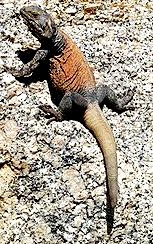
The chuckwalla is a large, chunky lizard of North American deserts with one of the most ingenious escape strategies of any lizard — when threatened, it dives into a rock crevice and inflates its body by gulping air until it is so tightly wedged into the rock that no predator can pull it out. Here are the most amazing chuckwalla facts! Did you know? When threatened, the chuckwalla dives into a rock crevice and inflates its body with air, expanding to fill the crevice so tightly that it becomes virtually impossible to pull out — Native Americans historically used a pointed stick to deflate and extract them for food! ðŸ’Ļ The Inflation Escape Strategy The chuckwalla's primary defensive strategy is one of the most unusual found in any lizard species. When a predator such as a hawk, coyote or snake approaches, the chuckwalla retreats rapidly into a narrow rock crevice — which it knows intimately from its territory — and proceeds to gulp air rapidly, inflating its loose, baggy skin to dram...

Potto Amazing Facts — Africa's Mystery Primate With a Neck Full of Spikes

Image
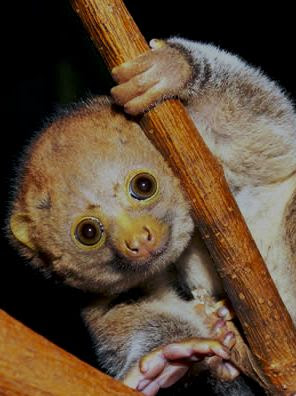
The potto is one of Africa's most mysterious and least known primates — a slow-moving, nocturnal, bear-like creature of West and Central African rainforests that hides one of the most surprising defensive weapons found in any primate, and has a grip so strong that it can hang from a branch all night even while completely asleep. Here are the most amazing potto facts! Did you know? The potto has elongated, sharp-tipped vertebrae that pierce through the skin of its neck — creating a row of spiky protrusions that it uses to head-butt predators that grab it from behind, driving the spines into the attacker's face as a genuinely painful defensive weapon! ðŸĶī The Spine Weapon Hidden in the Neck The potto's most remarkable feature is one that is largely invisible until the animal activates it. Several of the potto's neck vertebrae have enormously elongated spinous processes — the projections that normally form the small bumps you can feel along any vertebrate's spine — t...

Bush Baby Amazing Facts — Africa's Enormous-Eyed Night Leaper With a Cry Like a Human Baby

Image
The bush baby — also called the galago — is one of Africa's most enchanting and most extraordinary small primates. With enormous, disc-like eyes that glow in the dark, the ability to leap over 2 metres in a single bound, and a distress cry so similar to a human baby's wail that it has given the animal its common name, the bush baby is one of Africa's most distinctive and most fascinating nocturnal creatures. Here are the most amazing bush baby facts! Did you know? Bush babies can leap over 2 metres in a single bound — more than 25 times their own body length — using their extraordinarily powerful hind legs. They also mark their territory by urinating on their own hands and feet, leaving scent trails on every surface they touch! 👁️ Eyes Designed for the African Night The bush baby's most immediately striking feature is its enormous eyes — huge, forward-facing, disc-shaped structures that can appear almost comically large relative to the animal's small round face. ...