Posts

Showing posts with the label lizards

Dimetrodon Amazing Facts — The Sail-Backed Predator That Was Not a Dinosaur

Image
Dimetrodon is one of the most recognisable prehistoric animals in popular culture — a large, sail-backed carnivore that frequently appears in dinosaur toys, books and exhibitions. Yet Dimetrodon was not a dinosaur. It was not even remotely closely related to dinosaurs. In fact, Dimetrodon is more closely related to you than it is to any dinosaur that ever lived. Here are the most amazing Dimetrodon facts! Did you know? Dimetrodon is more closely related to mammals — including humans — than it is to any dinosaur. It belongs to a group called synapsids, which are the evolutionary ancestors of all mammals, living and extinct. The dinosaurs came from a completely different evolutionary line! 🧬 Closer to Humans Than to Dinosaurs This is perhaps the most surprising fact about Dimetrodon — despite frequently appearing alongside dinosaurs in popular culture and children's toy sets, Dimetrodon is not a dinosaur and is not even a reptile in the modern sense of the term. Dimetrodon belongs ...
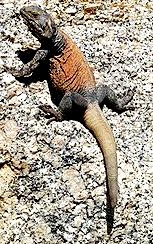
Chuckwalla Amazing Facts — The Desert Lizard That Inflates Itself Into a Rock

Image
The chuckwalla is a large, chunky lizard of North American deserts with one of the most ingenious escape strategies of any lizard — when threatened, it dives into a rock crevice and inflates its body by gulping air until it is so tightly wedged into the rock that no predator can pull it out. Here are the most amazing chuckwalla facts! Did you know? When threatened, the chuckwalla dives into a rock crevice and inflates its body with air, expanding to fill the crevice so tightly that it becomes virtually impossible to pull out — Native Americans historically used a pointed stick to deflate and extract them for food! 💨 The Inflation Escape Strategy The chuckwalla's primary defensive strategy is one of the most unusual found in any lizard species. When a predator such as a hawk, coyote or snake approaches, the chuckwalla retreats rapidly into a narrow rock crevice — which it knows intimately from its territory — and proceeds to gulp air rapidly, inflating its loose, baggy skin to dram...

Chameleon Amazing Facts — The Colour-Changing Master of Secrets

Image
  No animal is more associated with disguise and concealment than the chameleon. Its legendary ability to change colour has made it a symbol of adaptability across human cultures for centuries. But the truth about chameleons is far stranger and more extraordinary than the popular myths suggest. Chameleons do not change colour primarily for camouflage — they do it to communicate. And that is just the beginning of what makes these remarkable reptiles so extraordinary. Here are the most amazing chameleon facts that will completely change everything you thought you knew! Did you know? Chameleons do not change colour primarily to hide — they change colour to communicate emotions, signal dominance, attract mates and regulate body temperature. Their colour changes are essentially a visible emotional display! 🎨 The Real Reason Chameleons Change Colour The popular belief that chameleons change colour to match their background and become invisible is largely a myth. While some colour ...

Lizard Amazing Facts — Nature's Master of Self-Repair and Disguise

Image
Lizards represent one of the most diverse and successful groups of reptiles found anywhere on Earth, with species ranging from tiny creatures small enough to balance on a fingertip to massive predators capable of taking down large prey. Across this remarkable diversity, lizards have evolved an extraordinary range of survival adaptations, from the ability to deliberately shed parts of their own bodies to escape predators, to walking confidently across walls and ceilings using nothing but specialised toe structures. Here are the most amazing lizard facts that reveal the true extent of this incredibly varied reptile group's evolutionary ingenuity! Did you know? Many lizard species can deliberately detach their own tail when grabbed by a predator, a process called autotomy. The severed tail continues wriggling vigorously on its own for several minutes, distracting the predator while the lizard escapes — and remarkably, a new tail will eventually regrow! ✂️ Sacrificing a Tail to Save a ...