Posts

Showing posts with the label insects

Hover Fly Amazing Facts — The Harmless Wasp Impersonator Pollinating Your Garden

Image
    Hover flies are among the most accomplished insect mimics in the world — flies that have evolved to look convincingly like wasps and bees despite being completely harmless and entirely incapable of stinging. Yet these unassuming insects are also among the most important pollinators in temperate ecosystems and perform some of the most extraordinary aerial manoeuvres of any flying insect. Here are the most amazing hover fly facts! Did you know? Hover flies can fly backwards, sideways and hover in a fixed spot in mid-air with extraordinary precision — and some species migrate across the English Channel and North Sea each autumn in their millions, travelling hundreds of kilometres in a single journey! ✈️ Masters of Aerial Precision Hover flies — also called flower flies or syrphid flies — are named for their most distinctive behaviour: the ability to hover with extraordinary stability in a fixed position in mid-air, maintaining their precise location against wind and air cu...

Stick Insect Amazing Facts — The Master of Disguise That Reproduces Without Males

Image
Stick insects — also called walking sticks or phasmids — are among the most extraordinary masters of camouflage in the entire animal kingdom, having evolved body forms so similar to twigs, leaves and bark that they are genuinely invisible in their natural habitat even to expert observers. But their camouflage is only the beginning of the stick insect's remarkable biological story. Here are the most amazing stick insect facts! Did you know? Many stick insect species reproduce entirely without males through parthenogenesis — females produce offspring that are genetically identical clones of themselves, with males of some species so rare they were unknown to science for over a century! 🥚 Reproducing Without Males — Entirely Many stick insect species are capable of complete parthenogenesis — reproduction in which females produce genetically identical offspring without any male fertilisation whatsoever. In some species this is the exclusive reproductive mode, with males either extremel...

Grasshopper Amazing Facts — The Insect That Hears With Its Belly and Becomes Something Else Entirely Under Crowding

Image
The grasshopper is one of the most familiar insects in meadows and grasslands worldwide — yet most people are entirely unaware that this common insect is hiding two extraordinary secrets. It hears using organs on its abdomen rather than its head, and under certain conditions it can undergo a complete personality and physical transformation, becoming a completely different-looking creature that swarms in billions. Here are the most amazing grasshopper facts! Did you know? Grasshoppers can leap distances up to 20 times their own body length in a single jump — equivalent to a human jumping nearly 40 metres — and they hear using tympanal organs located on the sides of their abdomen rather than anywhere near their head! 👂 Ears on the Abdomen Grasshoppers do not have ears anywhere near their head — their hearing organs, called tympanal organs, are located on the first segment of their abdomen, just behind the hind legs. These tympanal organs are thin, membrane-covered structures that vibrat...

Earwig Amazing Facts — The Insect With Pincers, Hidden Wings and Surprisingly Devoted Motherhood

Image
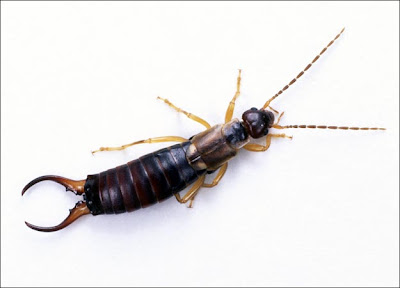
The earwig is one of the most misunderstood and most unfairly maligned insects in the garden — a creature surrounded by myths, including the entirely false belief that it crawls into human ears at night. In reality, the earwig is a fascinating insect with remarkable folding wings, powerful defensive pincers and one of the most extraordinary examples of maternal care found in any insect species. Here are the most amazing earwig facts! Did you know? Female earwigs are among the most devoted insect mothers on Earth — guarding their eggs continuously for weeks, turning them regularly to prevent fungal growth and licking them clean daily. If the eggs are moved away, she will search for and retrieve them one by one! 👂 The Ear Myth — Completely False The earwig's name — derived from the Old English "ēare wicga" meaning "ear creature" — reflects an ancient and entirely unfounded belief that earwigs deliberately crawl into the ears of sleeping humans to lay eggs in the ...

Bed Bug Amazing Facts — The Tiny Survivor That Outwits Us All

Image
Few creatures inspire as much instant discomfort as the bed bug. Yet behind the unpleasant reputation lies one of the most extraordinarily resilient and biologically fascinating insects on the planet. Bed bugs have survived alongside humans for tens of thousands of years, developing remarkable adaptations that allow them to detect us, feed on us, and resist nearly everything we throw at them. Here are the most amazing bed bug facts that reveal exactly how this small insect has become one of the toughest survivors in the natural world! Did you know? Bed bugs can detect the carbon dioxide you exhale and the warmth of your body from several metres away — and they can survive for over a year without feeding at all, patiently waiting for their next meal! 🧬 Ancient Companions of Humanity Bed bugs are not a modern problem — they have been associated with human dwellings for an extraordinarily long time. Fossil evidence and genetic studies suggest that bed bugs first began feeding on early ...

Butterfly Amazing Facts — The Insect That Dissolves Itself Completely to Be Reborn

Image
A butterfly's life cycle consists of four major stages, namely - the egg, larva, pupae and adult stage . This process is known as   metamorphosis . The average lifespan for an adult butterfly is just 20 to 40 days . Butterflies have their skeletons on the outside of their bodies is called the exoskeleton.   They don’t have lungs, butterflies breath through   openings   in their   abdomen   called spiracles. They have their taste receptors on their feet.   Butterfly has hair on its wings to detect changes in air pressure . The butterfly is one of the most familiar and most universally beloved insects on Earth — yet the biology hidden beneath those beautiful wings is far more extraordinary than most people ever realise. A butterfly's transformation from caterpillar to winged adult involves one of the most dramatic and most biologically shocking processes in all of nature — the caterpillar essentially dissolves itself into living soup and rebui...

Wasp Facts — Nature's Most Misunderstood Insect

Image
Wasps have a reputation as aggressive, annoying insects that exist only to sting unsuspecting picnickers. But this reputation is deeply unfair! Wasps are actually one of nature's most remarkable and important creatures. They are master architects, skilled hunters, and vital pest controllers that protect our crops and gardens every single day.   Here are the most amazing wasp facts that will completely change how you see these fascinating insects! Did you know? Without wasps, many of the fruits and vegetables we eat every day would not exist. Wasps are vital pollinators and pest controllers! 🏗️ Master Architects Wasp nests are engineering masterpieces. Worker wasps build their nests by chewing wood fibres mixed with their saliva to create a papery material — making them the original inventors of paper! A large wasp nest can contain thousands of perfectly hexagonal cells arranged in layers called combs. The hexagonal shape is not accidental — it is the most efficient shape in ...

Mosquito Amazing Facts — The World's Deadliest Animal Is Smaller Than Your Fingernail

Image
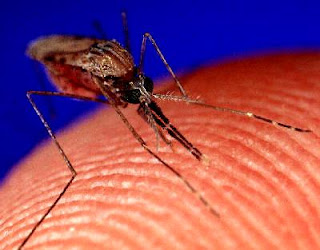
Despite weighing just a few milligrams, the mosquito holds a title that might surprise many people — it is the deadliest animal on Earth to humans, responsible for more human deaths annually than sharks, lions, snakes and all other dangerous animals combined. Yet beyond its dangerous reputation as a disease carrier, the mosquito is an insect of genuinely remarkable biological sophistication, with hunting abilities and survival adaptations that rival far more celebrated predators. Here are the most amazing mosquito facts that reveal the true complexity of this tiny but formidable insect! Did you know? Mosquitoes are responsible for more human deaths every year than any other animal on Earth — an estimated 700,000 to 1 million people die annually from mosquito-borne diseases including malaria, dengue fever and yellow fever! 🩸 Only Females Bite One of the most commonly misunderstood mosquito facts is that only female mosquitoes bite and feed on blood — male mosquitoes feed exclusively ...