Posts

Showing posts with the label Primates

Potto Amazing Facts — Africa's Mystery Primate With a Neck Full of Spikes
Image
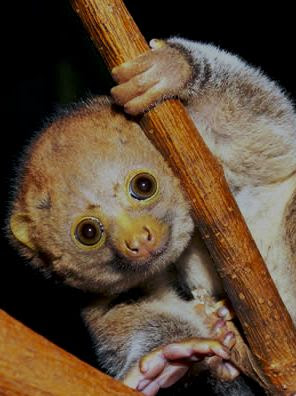
The potto is one of Africa's most mysterious and least known primates — a slow-moving, nocturnal, bear-like creature of West and Central African rainforests that hides one of the most surprising defensive weapons found in any primate, and has a grip so strong that it can hang from a branch all night even while completely asleep. Here are the most amazing potto facts! Did you know? The potto has elongated, sharp-tipped vertebrae that pierce through the skin of its neck — creating a row of spiky protrusions that it uses to head-butt predators that grab it from behind, driving the spines into the attacker's face as a genuinely painful defensive weapon! 🦴 The Spine Weapon Hidden in the Neck The potto's most remarkable feature is one that is largely invisible until the animal activates it. Several of the potto's neck vertebrae have enormously elongated spinous processes — the projections that normally form the small bumps you can feel along any vertebrate's spine — t...

Bush Baby Amazing Facts — Africa's Enormous-Eyed Night Leaper With a Cry Like a Human Baby

Image
The bush baby — also called the galago — is one of Africa's most enchanting and most extraordinary small primates. With enormous, disc-like eyes that glow in the dark, the ability to leap over 2 metres in a single bound, and a distress cry so similar to a human baby's wail that it has given the animal its common name, the bush baby is one of Africa's most distinctive and most fascinating nocturnal creatures. Here are the most amazing bush baby facts! Did you know? Bush babies can leap over 2 metres in a single bound — more than 25 times their own body length — using their extraordinarily powerful hind legs. They also mark their territory by urinating on their own hands and feet, leaving scent trails on every surface they touch! 👁️ Eyes Designed for the African Night The bush baby's most immediately striking feature is its enormous eyes — huge, forward-facing, disc-shaped structures that can appear almost comically large relative to the animal's small round face. ...

Monkey Amazing Facts — Our Distant Cousins With Surprising Cultures

Image
Monkeys are among the most diverse and behaviorally sophisticated animal groups found anywhere on Earth, with over 260 distinct species displaying an extraordinary range of intelligence, social complexity and physical adaptation across habitats ranging from dense tropical rainforests to high mountain regions. From genuine tool use to passing learned cultural traditions between generations, monkeys consistently demonstrate cognitive abilities that continue to surprise researchers studying primate behaviour. Here are the most amazing monkey facts that reveal just how sophisticated these intelligent primates truly are! Did you know? Capuchin monkeys have been observed using stone tools to crack open hard nuts for over 700 years, with distinct regional "tool traditions" passed down through many successive generations — representing one of the longest documented examples of continuous animal culture anywhere in the world! 🔨 Monkeys With Centuries-Old Tool Traditions Wild Capuc...

Gorilla Amazing Facts — Our Closest Giant Cousin

Image
Gorillas are the largest primates on Earth and our closest relatives after chimpanzees and bonobos — sharing approximately 98.3% of their DNA with human beings. But despite this remarkable genetic closeness, gorillas remain deeply misunderstood animals. The popular image of the gorilla as an aggressive, dangerous beast is almost entirely false — in reality, gorillas are extraordinarily gentle, deeply social, and emotionally sophisticated animals whose similarities to humans are both striking and humbling. Here are the most amazing gorilla facts that reveal the true nature of our magnificent great ape cousins! Did you know? Gorillas share 98.3% of their DNA with human beings — making them more closely related to us than they are to other monkeys. They can learn sign language, recognise themselves in mirrors, and mourn their dead. 🧬 More Human Than We Realise The genetic similarity between gorillas and humans is so profound that it extends far beyond DNA percentages into observable ever...

Aye-Aye Amazing Facts — Madagascar's Most Misunderstood and Most Extraordinary Primate

Image
The aye-aye is one of the strangest-looking mammals on Earth — a nocturnal primate from Madagascar with enormous bat-like ears, continuously growing rodent-like incisors, penetrating orange eyes and an extraordinarily elongated, skeletal middle finger used in a hunting technique found nowhere else in the primate world. Despite its bizarre appearance, the aye-aye is an extraordinarily sophisticated animal whose unique adaptations allow it to exploit a food source inaccessible to almost any other mammal. Here are the most amazing aye-aye facts! Did you know? The aye-aye taps on wood up to eight times per second, listening to the echo with its enormous ears to detect hollow chambers where insect larvae are hiding — then gnaws through the wood and extracts the grubs using its extraordinarily long, thin middle finger. It's essentially a primate woodpecker! 👆 The Most Specialised Finger in the Primate World The aye-aye's third finger — its middle finger — is so dramatically elong...

Proboscis Monkey Amazing Facts — Borneo's Most Extraordinary and Most Endangered Primate

Image
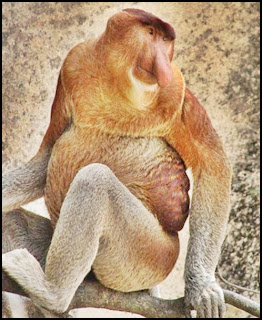
The proboscis monkey is one of the most distinctive and most unusual-looking primates on Earth — a large, pot-bellied monkey found exclusively in the coastal forests of Borneo, famous for the male's extraordinarily enlarged, pendulous nose that hangs so far down it must be pushed aside before the monkey can eat. But the proboscis monkey's remarkable appearance is matched by an equally remarkable biology and an increasingly desperate conservation situation. Here are the most amazing proboscis monkey facts! Did you know? The male proboscis monkey's enormous drooping nose actually amplifies and deepens its honking calls — the larger the nose, the deeper and more resonant the call, making the nose an honest signal of male size and genetic quality to females choosing a mate! 👃 The Nose That Wins Mates   The male proboscis monkey's extraordinary nose — which can exceed 10 centimetres in length in older males, drooping well below the chin — is one of the most dramatic exampl...

Gibbon Amazing Facts — The Forest's Greatest Acrobat Sings Duets With Its Partner

Image
Gibbons are the smallest and fastest of the apes — remarkably acrobatic primates of Southeast Asian forests that travel through the forest canopy at breathtaking speeds using a movement style called brachiation that no other primate can match. They are also the only apes known to be truly monogamous, singing elaborate duets with their partners that can be heard kilometres away. Here are the most amazing gibbon facts! Did you know? Gibbons can swing through the forest canopy at speeds of up to 55 kilometres per hour, covering distances of up to 15 metres in a single swing — and their ball-and-socket wrist joints can rotate 360 degrees, allowing direction changes mid-swing that would dislocate a human wrist instantly! 🤸 The Fastest Tree-Travelling Primate Gibbons move through the forest canopy using brachiation — swinging hand-over-hand beneath branches — with a speed and elegance that surpasses every other primate. At full speed, a gibbon can cover 15 metres in a single arm swing an...