Posts

Showing posts with the label reptiles

Dimetrodon Amazing Facts — The Sail-Backed Predator That Was Not a Dinosaur

Image
Dimetrodon is one of the most recognisable prehistoric animals in popular culture — a large, sail-backed carnivore that frequently appears in dinosaur toys, books and exhibitions. Yet Dimetrodon was not a dinosaur. It was not even remotely closely related to dinosaurs. In fact, Dimetrodon is more closely related to you than it is to any dinosaur that ever lived. Here are the most amazing Dimetrodon facts! Did you know? Dimetrodon is more closely related to mammals — including humans — than it is to any dinosaur. It belongs to a group called synapsids, which are the evolutionary ancestors of all mammals, living and extinct. The dinosaurs came from a completely different evolutionary line! 🧬 Closer to Humans Than to Dinosaurs This is perhaps the most surprising fact about Dimetrodon — despite frequently appearing alongside dinosaurs in popular culture and children's toy sets, Dimetrodon is not a dinosaur and is not even a reptile in the modern sense of the term. Dimetrodon belongs ...
Chuckwalla Amazing Facts — The Desert Lizard That Inflates Itself Into a Rock

Image
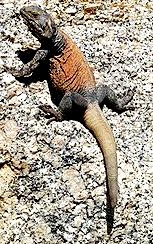
The chuckwalla is a large, chunky lizard of North American deserts with one of the most ingenious escape strategies of any lizard — when threatened, it dives into a rock crevice and inflates its body by gulping air until it is so tightly wedged into the rock that no predator can pull it out. Here are the most amazing chuckwalla facts! Did you know? When threatened, the chuckwalla dives into a rock crevice and inflates its body with air, expanding to fill the crevice so tightly that it becomes virtually impossible to pull out — Native Americans historically used a pointed stick to deflate and extract them for food! 💨 The Inflation Escape Strategy The chuckwalla's primary defensive strategy is one of the most unusual found in any lizard species. When a predator such as a hawk, coyote or snake approaches, the chuckwalla retreats rapidly into a narrow rock crevice — which it knows intimately from its territory — and proceeds to gulp air rapidly, inflating its loose, baggy skin to dram...

Python Amazing Facts — The World's Largest Snakes Can Swallow Deer Whole and Detect Heat in Darkness

  Pythons are among the most impressive and most biologically extraordinary snakes on Earth — massive constrictors capable of swallowing prey many times the diameter of their own head, detecting warm-blooded animals in complete darkness through heat-sensing pit organs, and surviving without food for up to two years between meals. Here are the most amazing python facts! Did you know? A reticulated python can swallow a deer, pig or even an adult human whole — and after an exceptionally large meal, its organs temporarily GROW in size to cope with the digestive demand, then shrink back down when digestion is complete! 📏 The World's Longest Snake The reticulated python, Malayopython reticulatus, holds the record as the world's longest snake — reliably measured specimens have reached 6.5 metres, with credible reports of individuals approaching 8 metres. The green anaconda of South America is heavier — making it the most massive snake species — but the reticulated python is longer, t...

🐊Crocodile Amazing Facts — The Living Dinosaur That Rules Our Rivers

Image
Crocodiles are living relics of the age of dinosaurs. While the great dinosaurs vanished 66 million years ago, crocodiles survived virtually unchanged — the same basic body plan, the same predatory strategies, the same extraordinary adaptations that made them survivors of the greatest mass extinction in Earth's history. Today they remain among the most successful and dangerous predators on the planet. But crocodiles are far more than just ambush hunters — they are surprisingly complex animals with remarkable behaviours that scientists are only beginning to understand. Here are the most amazing crocodile facts you never knew! Did you know? Crocodiles have been on Earth for over 200 million years — they lived alongside the dinosaurs and survived the asteroid impact that killed them. The crocodile you see today is almost identical to its Jurassic ancestors. 🦷 The Most Powerful Bite on Earth The saltwater crocodile — the largest reptile on Earth — possesses the most powerful bite for...

Chameleon Amazing Facts — The Colour-Changing Master of Secrets

Image
  No animal is more associated with disguise and concealment than the chameleon. Its legendary ability to change colour has made it a symbol of adaptability across human cultures for centuries. But the truth about chameleons is far stranger and more extraordinary than the popular myths suggest. Chameleons do not change colour primarily for camouflage — they do it to communicate. And that is just the beginning of what makes these remarkable reptiles so extraordinary. Here are the most amazing chameleon facts that will completely change everything you thought you knew! Did you know? Chameleons do not change colour primarily to hide — they change colour to communicate emotions, signal dominance, attract mates and regulate body temperature. Their colour changes are essentially a visible emotional display! 🎨 The Real Reason Chameleons Change Colour The popular belief that chameleons change colour to match their background and become invisible is largely a myth. While some colour ...

Snake Amazing Facts — The Limbless Hunter With Extraordinary Senses

Image
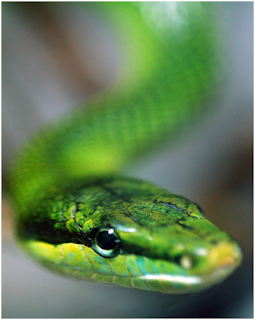
Snakes are among the most feared and misunderstood animals on Earth, yet they are also one of evolution's most extraordinary success stories. Having lost their limbs over 100 million years ago, snakes have developed an entirely different toolkit of senses and abilities to survive and thrive — abilities so remarkable that they often seem to belong to a creature from science fiction rather than the natural world. Here are the most amazing snake facts that will completely change how you see these fascinating reptiles! Did you know? Some snakes can "see" heat. Pit vipers, including rattlesnakes, have heat-sensing organs so sensitive they can detect temperature differences of just 0.003 degrees Celsius — allowing them to hunt warm-blooded prey in complete darkness! 🔥 Snakes That See Heat Instead of Light Pit vipers — a group that includes rattlesnakes, copperheads and pythons — possess one of the most extraordinary sensory organs in the entire animal kingdom. Located betw...

Black Caiman Amazing Facts — The Amazon's Apex Predator That Bounced Back from Near Extinction

Image
The black caiman is the largest predator in the entire Amazon River ecosystem and the largest member of the alligator family — a magnificent, jet-black reptile that rules the rivers and flooded forests of South America with the authority of an animal that has survived virtually unchanged for millions of years. Hunted almost to extinction during the 20th century, the black caiman's remarkable recovery is one of South America's greatest conservation success stories. Here are the most amazing black caiman facts! Did you know? The black caiman is the largest predator in the Amazon and can grow to over 5 metres in length — yet it was hunted so intensively for its skin that it was functionally eliminated from most of its range by the 1970s, before legal protection allowed a remarkable population recovery! 🖤 The Amazon's Apex Predator The black caiman, Melanosuchus niger, is the largest member of the Alligatoridae family and the dominant apex predator across much of the Amazon ...

Tortoise Amazing Facts — The Slow-Moving Animal That Outlives Almost Everything

Image
The tortoise is one of the most extraordinary examples of evolutionary longevity found anywhere in the animal kingdom, with certain individual tortoises living long enough to have witnessed major historical events spanning multiple human generations. Beyond their famously slow movement and remarkable lifespan, tortoises possess a genuinely fascinating set of biological adaptations that have allowed this ancient reptile lineage to survive largely unchanged for tens of millions of years. Here are the most amazing tortoise facts that reveal the true extent of this patient, long-lived animal's remarkable biology! Did you know? The oldest known living land animal on Earth is a Seychelles giant tortoise named Jonathan, believed to be over 190 years old, having been born sometime in the 1830s — meaning Jonathan was already a fully grown adult tortoise before many significant events of modern history had even occurred! 🏆 Among the Longest-Lived Animals on Earth The shell of a turtle i...