
Cheetah Amazing Facts — The Fastest Land Animal on Earth
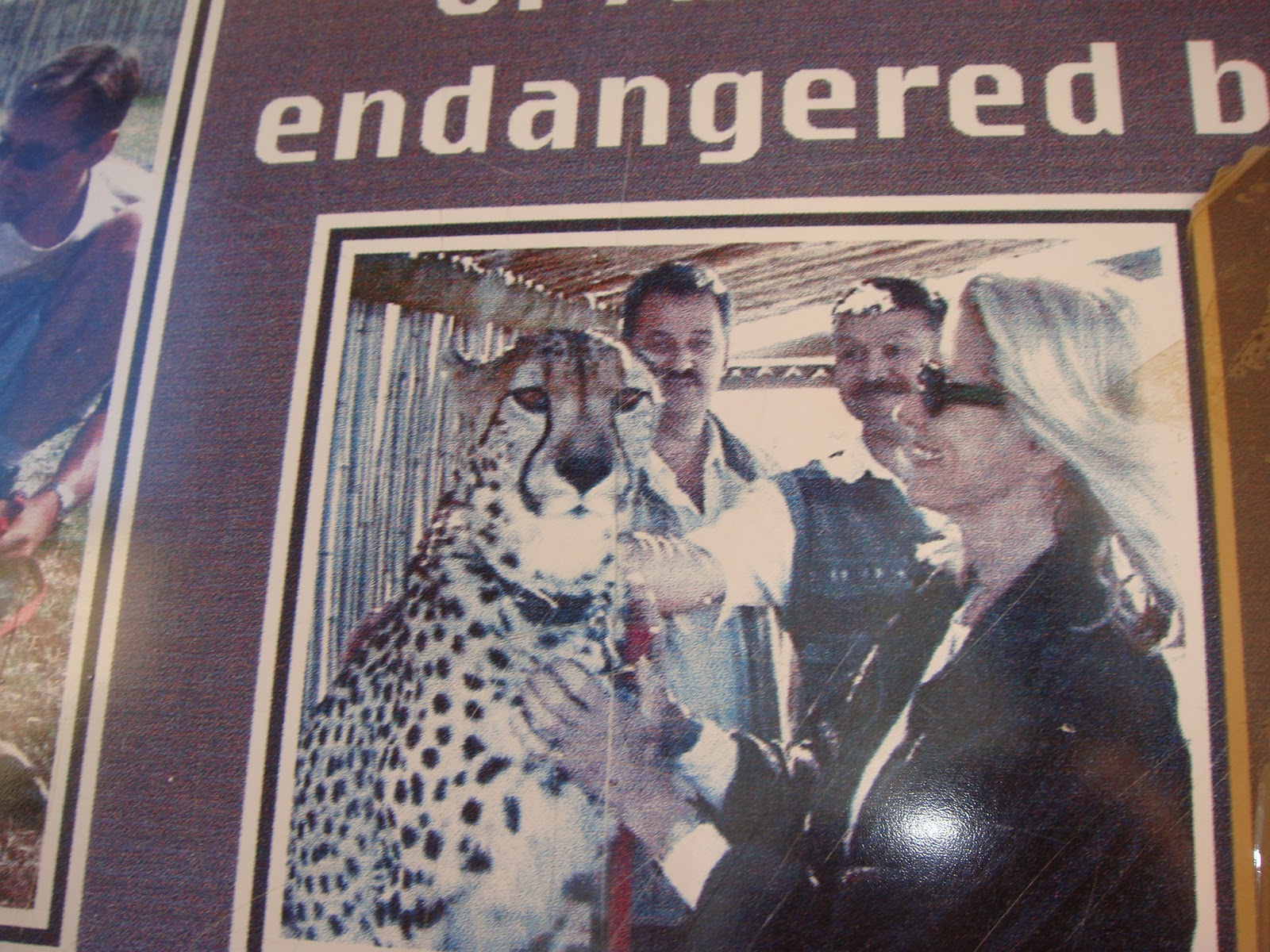


The cheetah holds a record that no other land animal on Earth can match — it is the fastest. But speed is just the beginning of what makes the cheetah extraordinary. This slender, spotted big cat has evolved a body so specialised for high-speed pursuit that it has become one of the most unique animals on the planet — with adaptations found nowhere else in the cat family, and a lifestyle shaped entirely around those few seconds of explosive acceleration that define its survival. Here are the most amazing cheetah facts you have never heard!
⚡ The Most Specialised Body in the Cat Family
The cheetah's body is so thoroughly modified for speed that it has essentially sacrificed everything else to achieve it. Its spine is extraordinarily flexible — acting like a coiled spring that extends and compresses with each stride, dramatically increasing the length of each step. At full sprint, a cheetah's stride length reaches approximately 7 to 8 metres — meaning it covers the length of a large room with every single bound. Its deep chest contains oversized lungs and a large heart that can pump enormous quantities of oxygen-rich blood to the muscles during a sprint. Its non-retractable claws — unique among big cats — function like running spikes, digging into the ground to provide traction at extreme speeds. Even the dark "tear marks" running from the inner corners of its eyes to its mouth serve a function — reducing glare from the sun during daytime hunts.
💨 The Sprint That Cannot Last
A cheetah's full-speed sprint is one of the most physically demanding activities performed by any animal — and it comes at a severe cost. A typical high-speed chase lasts only 20 to 60 seconds and covers a distance of 200 to 300 metres before the cheetah must stop, regardless of whether the hunt was successful. After a sprint, a cheetah's body temperature rises to near-dangerous levels and it must rest for 20 to 30 minutes to recover before it can eat, move normally, or defend itself. During this recovery period the cheetah is completely vulnerable — it cannot fight off lions, hyenas or other predators that frequently steal its kills. Successful hunting therefore requires not just speed, but extraordinary judgement about when and where to launch a chase to maximise the chances of success before exhaustion forces a halt.
😢 The Cat That Cannot Roar
Unlike lions, tigers and leopards, cheetahs cannot roar. Their larynx — the voice box — is fixed rather than flexible, which prevents the deep resonating roar produced by the other big cats. Instead, cheetahs communicate through a remarkable repertoire of surprisingly un-cat-like sounds. They chirp — producing a high-pitched bird-like call used by mothers to locate their cubs and by individuals to locate each other across open grassland. They purr — like domestic cats, but much louder. They also produce a sound called churring — a stuttering, mechanical-sounding call used during social interactions. Mother cheetahs and their cubs maintain near-constant vocal contact using these calls, creating a surprisingly intimate communication system for an animal that otherwise appears built purely for solitary speed.
🧬 A Genetic Bottleneck
Cheetahs face a genetic crisis unlike any other large cat. Around 10,000 years ago, the global cheetah population went through a catastrophic bottleneck — possibly caused by a combination of climate change and human pressure — that reduced the entire world population to an extraordinarily small number of individuals, perhaps just a few dozen. All cheetahs alive today are descended from those few survivors, making them genetically almost identical to one another. Scientists have demonstrated this genetic uniformity dramatically — skin grafts between unrelated cheetahs are accepted without rejection, just as they would be between identical twins. This lack of genetic diversity makes the entire species vulnerable to new diseases, since the immune variation that protects other species from novel pathogens is largely absent in cheetahs.
👩 Mothers Who Raise Adventurers
Female cheetahs are among the most dedicated and creative animal mothers in the African savanna. They raise their cubs — typically litters of three to five — entirely alone, constantly moving the family between hiding spots to avoid predators. When the cubs are old enough to begin learning to hunt, the mother engages in a remarkable teaching strategy — she begins catching prey animals and releasing them alive in front of the cubs, allowing them to practice chasing and catching. Initially the cubs are clumsy and unsuccessful, but the mother persists with this live prey training over many months, gradually allowing the cubs to take on increasingly challenging targets. By the time the cubs are independent at around 18 months old, they have had hundreds of supervised practice hunts to prepare them for survival.
🤝 Brother Coalitions
While female cheetahs are solitary, male cheetahs often form coalitions — small groups of two to three males, usually brothers from the same litter, who remain together for life. These coalitions are far more effective at holding territories, defending kills, and even taking down larger prey than a solitary male could manage alone. Coalition males develop extraordinarily tight social bonds — greeting each other with elaborate rituals, grooming each other, and showing clear signs of distress when separated. Studies have shown that coalition males have significantly higher reproductive success and longer lifespans than solitary males, making cooperation a dramatically better survival strategy in the competitive African savanna.
Amazing final fact: The cheetah is the only big cat that can be — and historically was — tamed and kept as a hunting companion by humans. Ancient Egyptians, Indian Mughal emperors and medieval European royalty all kept trained cheetahs for hunting. The Mughal Emperor Akbar the Great reportedly kept over 1,000 cheetahs during his reign in the 16th century. This long tradition of taming may have contributed to the extinction of the Asiatic Cheetah across most of its range — India's last wild cheetahs disappeared in 1947.
The cheetah traded strength and versatility for one extraordinary gift — speed beyond anything else on land. Every aspect of its remarkable body tells the story of that trade. 🐆
All content written originally by Geeta Singh.
Sources: Information researched from Wikipedia (en.wikipedia.org), WWF Wildlife, National Geographic, Cheetah Conservation Fund, IUCN Red List.


Comments
www.deepakkarthikspeaks.blogspot.com