
Beddome's Toad Amazing Facts — India's Critically Endangered Western Ghats Toad
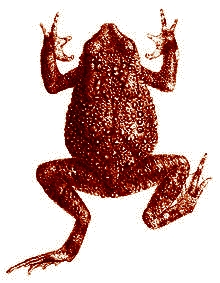
Beddome's Toad, Xanthophryne tigerinus — previously known as Bufo beddomeii and named in honour of the British naturalist and Indian forest officer Colonel Richard Henry Beddome who extensively documented the natural history of India's Western Ghats during the 19th century — is a Critically Endangered toad species found only in a tiny area of the Western Ghats mountain range. Remarkably rediscovered after being feared extinct, this species has a story that illustrates both the fragility and the resilience of India's extraordinary endemic amphibian fauna. Here are the most amazing Beddome's Toad facts!
🔍 The Species That Came Back from the Dead
Beddome's Toad had not been reliably recorded by scientists for many decades before its dramatic rediscovery in the Western Ghats, leading to genuine fears that the species might have gone extinct without any formal notice or documentation of its disappearance. Its eventual rediscovery was a genuinely significant moment for Indian herpetology, demonstrating that secretive, range-restricted amphibian species can sometimes persist undetected in the remaining patches of suitable habitat even when searches have failed to locate them for years. However, the rediscovery simultaneously revealed that the species' remaining population is extremely small and its range extremely limited, placing it firmly in the Critically Endangered category.
🏔️ A Specialist of Rocky Western Ghats Streams
Beddome's Toad is highly habitat-specific, found only in rocky stream environments within moist evergreen forests at specific elevation ranges in the Western Ghats. This extreme habitat specificity — requiring not just the presence of forest but particular forest types at particular altitudes with particular stream characteristics — makes the species exceptionally vulnerable to any modification of its limited range. The rocky stream habitats it occupies, while still present in some protected areas, face threats from sedimentation caused by surrounding land use changes, pollution from agricultural runoff and disturbance from illegal sand extraction from riverbeds.
🌧️ A Monsoon Breeder
Like the majority of Western Ghats amphibians, Beddome's Toad times its breeding activity to coincide with the monsoon season, when heavy rainfall fills rocky stream pools and creates the temporary aquatic environments required for egg and tadpole development. Male toads call from concealed positions near breeding streams during the monsoon months, producing calls that attract females for mating. Eggs are deposited in strings in shallow rocky pools, and tadpoles develop through several stages before metamorphosing into juvenile toads. The entire visible lifecycle — adult activity, calling, breeding and tadpole development — is compressed into the months of heaviest monsoon rainfall.
🔬 Scientific Name Changes Reflecting New Understanding
Beddome's Toad has undergone several scientific name changes reflecting developing understanding of toad evolutionary relationships. Originally described in the genus Bufo — a broad catch-all toad genus that contained hundreds of species — it was later moved to Xanthophryne following detailed molecular phylogenetic analysis that revealed its evolutionary relationships were quite distinct from typical Bufo species. This pattern of taxonomic revision as molecular techniques reveal previously hidden evolutionary relationships is common among Western Ghats amphibians, with numerous species having their scientific names and classifications updated as genetic studies provide deeper insights into their evolutionary histories.
👨🔬 Named for a Remarkable Naturalist
The species' name honours Colonel Richard Henry Beddome, a British officer who served in India during the 19th century and made extraordinary contributions to documenting the natural history of the Western Ghats. Beddome collected and described dozens of new species of reptiles, amphibians, birds, plants and fish during his time in India, many of which were named in his honour by the scientific community. His field observations and collections contributed significantly to 19th century understanding of the remarkable biological diversity of southern India's mountain ranges, making his name permanently commemorated across a remarkable range of Indian species.
🌿 Conservation Within Protected Areas
The remaining known habitat of Beddome's Toad falls partly within protected areas in the Western Ghats, providing some degree of official protection for the species and its habitat. However, protection on paper does not always translate to effective on-the-ground conservation, with illegal activities including encroachment and poaching continuing to affect even designated protected areas across the Western Ghats. Long-term survival of this Critically Endangered toad will require not just habitat protection but active monitoring of remaining populations, research into its specific ecological requirements and a broader commitment to maintaining the ecological integrity of the stream habitats it depends on.
Small, secretive and holding on by the narrowest of margins, Beddome's Toad represents both the extraordinary biodiversity and the urgent conservation challenges facing India's Western Ghats amphibian community. 🐸


Comments